
How to Differentiate Restaurant Dessert Menus
by Editorial Team
Last Updated: 23 October 2026
Quick Summary
Differentiating dessert menus means giving guests a reason to order something they cannot get elsewhere, through unusual flavours, clever texture contrasts and a layout that makes choosing easy. It is not about adding more items but adding the right ones, pairing one adventurous flavour with one crowd-pleaser.
- Structure dessert menus by temperature, weight, flavour family or portion so guests can scan quickly.
- Offer the dessert menu verbally when clearing plates rather than relying on print alone.
- Price desserts at roughly a third to a half of an average main course.
- Launch one or two distinctive desserts at a time rather than ten at once.
- Ask suppliers about year-round supply, allergen documentation and facility certifications before committing.
Table of Contents
- Why Differentiating Your Dessert Menu Matters
- Restaurant Dessert Menu Ideas That Stand Out
- Restaurant Dessert Menu Design That Guides Choice
- How to Increase Dessert Sales in a Restaurant
- A Restaurant Dessert Pricing Strategy That Protects Margins
- Choosing the Right Dessert Supplier
- Frequently Asked Questions
Why Differentiating Your Dessert Menu Matters
Most restaurant dessert menus look the same. Sticky toffee pudding, a brownie, maybe a cheesecake. That sameness is costing operators money. A dessert menu is the last thing a guest sees before the bill, and it is often the highest-margin course on the list. When every option feels familiar, guests skip it. When something surprises them, they order.
At Yee Kwan Ice Cream, we have spent over 15 years supplying Asian-inspired ice creams and sorbets to restaurant groups, independent cafés and hotels, and we have seen how much a distinctive dessert line changes ordering behaviour. This guide covers how to differentiate restaurant dessert menus, from flavour choices to pricing and supplier checks.
Differentiating a dessert menu means giving guests a reason to order something they cannot get elsewhere: unusual flavours, clever texture contrasts, and a layout that makes choosing easy. It is not about adding more items. It is about adding the right ones.
Restaurant Dessert Menu Ideas That Stand Out
The strongest dessert menu ideas solve a problem the guest did not know they had. They offer contrast: hot and cold, soft and crunchy, sweet and savoury. They also give people something to talk about.
Here is how to structure a menu that feels different:
- Signature flavour pairings that guests cannot buy on a supermarket shelf
- A hot element alongside a cold one, such as a warm cake with ice cream
- A lighter option for guests who want freshness rather than richness
- A sharing format for tables ordering together
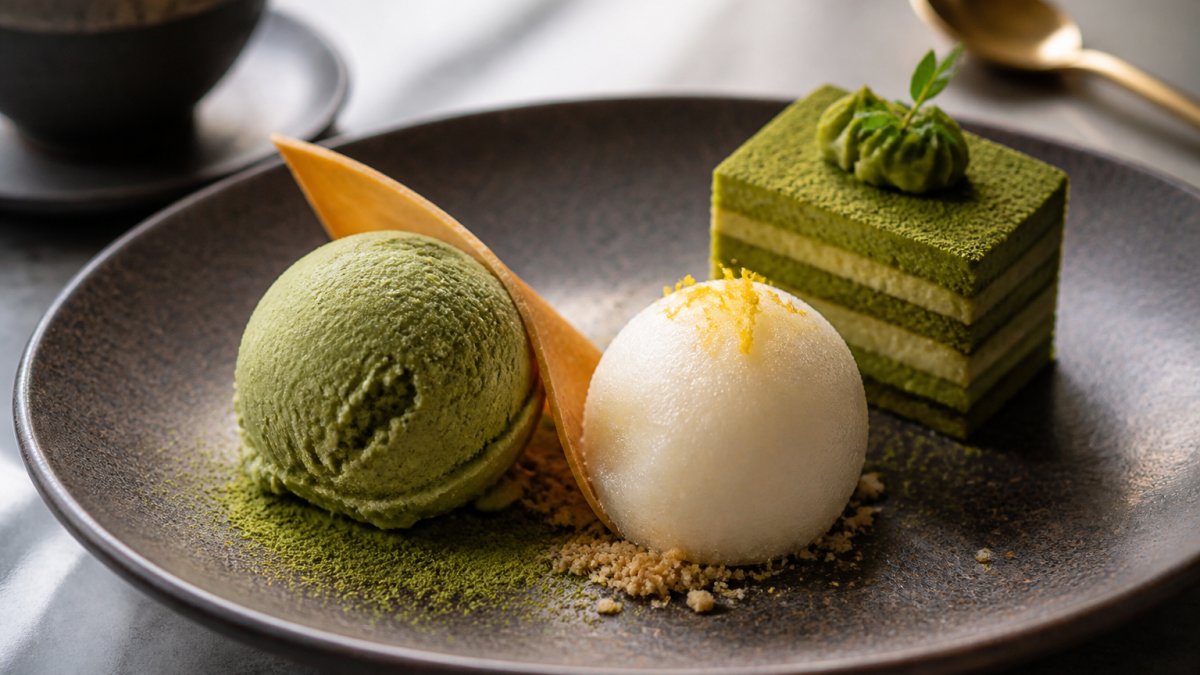
Signature Flavours and Asian-Inspired Options
Flavour is where differentiation starts. Matcha, miso, yuzu, black sesame and toasted coconut give guests a genuine reason to order. They are familiar enough to feel approachable but distinctive enough to feel like a treat.
Our own range leans on this. Matcha Green Tea Ice Cream brings earthy, vegetal notes with light sweetness. Yuzu Sorbet delivers a sharp, citrusy lift that cuts through a heavy meal.
The trick is balance. Pair one adventurous flavour with one crowd-pleaser so cautious guests still have a safe choice.
Texture, Temperature and Presentation Contrasts
A dessert that only delivers sweetness feels flat. Contrast is what makes it memorable.
- Crunch against cream, such as a biscuit crumb under ice cream
- Warm against cold, like a hot pudding with a cold scoop
- Sharp against rich, such as citrus sorbet after a creamy main
- Height on the plate, which reads as more generous
Presentation matters as much as flavour. A dessert that looks considered justifies a higher price and gets photographed, which is free marketing.
Restaurant Dessert Menu Design That Guides Choice
Design is not decoration. It is a sales tool. A well-designed dessert menu narrows the decision instead of overwhelming it.
Start with structure. Group desserts into clear categories so guests can scan quickly:
| Menu structure | Best for | Example grouping |
|---|---|---|
| By temperature | Ice cream-led menus | Cold, warm, room temperature |
| By weight | Fine dining | Light, rich, sharing |
| By flavour family | Distinctive ranges | Fruity, chocolate, earthy |
| By portion | Cafés and lunch trade | Single scoop, dessert plate, sharing board |
Keep descriptions short and sensory. "Earthy matcha with a light sweetness" tells a guest more than a list of ingredients. Put the most distinctive item first in each group, where the eye lands.
Physical layout matters too. A separate dessert card, offered after mains are cleared, gets more attention than a line at the bottom of the main menu.
How to Increase Dessert Sales in a Restaurant
Selling more dessert is mostly about timing and language, not discounting. The guest has already decided to spend; you are helping them decide on one more thing.
Practical moves that work:
- Offer the menu verbally when clearing plates, not just in print
- Describe one dessert in detail rather than listing all of them
- Suggest a dessert with coffee as a natural pairing
- Train staff to recommend one signature item consistently
- Show, don't just tell, with a small display or a photo of the signature plate
Staff confidence is the biggest lever. If servers can describe how a dessert tastes and why it is different, orders rise. A short pre-shift tasting session fixes this faster than any printed material.
A Restaurant Dessert Pricing Strategy That Protects Margins
Dessert pricing needs to do two jobs: cover cost and feel worth it. The mistake is pricing by habit rather than by value.
A simple approach is to price desserts as a percentage of your average main. Most operators find a dessert priced at roughly a third to a half of a main feels reasonable without looking cheap. Then check the margin on each item before it goes live.
Use this checklist for every dessert you price:
- Calculate the exact cost per portion, including garnish
- Add your target margin to reach a menu price
- Compare against your average main course price
- Check the price against what guests expect for the venue type
- Review after four weeks and adjust
Bundling helps too. A dessert plus a hot drink, or a tasting plate for two, raises the average spend without discounting the individual item.
Choosing the Right Dessert Supplier
A dessert menu is only as good as its supply. Consistency, allergen clarity and reliability matter more than a long product list.
Ask any supplier these questions before committing:
- Can you guarantee year-round supply of the flavours we list?
- Do you provide full allergen and nutritional documentation?
- What certifications does your production facility hold?
- What is your minimum order, and do you work with smaller operators?
- Can you supply samples for staff training?
We make our ice creams and sorbets in a SALSA-accredited, nut-free facility, with a selection of gluten-free flavours, and we supply restaurants, cafés and retailers throughout the UK. For operators wanting to try a range before committing, our Tasting Flight Box offers 12 flavours in 100ml portions at £36.00, which works well for staff tastings and menu trials.

If you want a single standout dessert rather than a full range, our Strawberry Matchamisu Dessert at £1.99 per portion layers matcha-soaked sponge with strawberry and mascarpone cream, and plates well as a signature item.

A dessert menu that looks like everyone else's will keep selling like everyone else's. The operators who stand out choose a clear point of view, price with margin in mind, and back it with a supplier they trust.
At Yee Kwan Ice Cream, we help restaurants and cafés do exactly that, with multi-award-winning Asian-inspired ice creams and sorbets, handcrafted in a SALSA-accredited, nut-free facility and backed by over 10 Great Taste Awards. Explore our Matcha Green Tea Ice Cream at £8.50 or our Yuzu Sorbet at £31.00, and build a dessert menu guests remember. Get started with Yee Kwan Ice Cream and give your dessert course a reason to be ordered.

Frequently Asked Questions
How can a restaurant make its dessert menu stand out?
Stand out by offering something diners cannot get elsewhere. Add one or two signature desserts with a clear point of difference, such as Asian-inspired flavours like matcha, yuzu or black sesame, rather than another chocolate brownie. Pair that with strong menu design: short descriptions, clear allergen notes and a separate dessert card all help. Offering a small tasting flight, such as three 100ml scoops, lets guests try adventurous flavours without committing to a full portion, which builds curiosity and repeat orders.
Should desserts appear on the main menu or on a separate menu?
A separate dessert menu works well when you want to draw attention to the course and give servers a natural prompt to present it after mains. It also keeps the main menu focused. For smaller cafés with limited covers, a dedicated dessert section on the main menu can be simpler and cheaper to print. Either way, keep dessert descriptions short and place the most profitable or signature item first, since diners tend to scan from the top.
How should a restaurant price its desserts?
Start from your food cost per portion and aim for a consistent gross margin across the dessert range, then adjust for perceived value. A dessert with a distinctive ingredient, such as premium matcha or yuzu, can carry a slightly higher price if the menu description explains what makes it special. Avoid pricing every dessert identically, as this flattens choice. Instead, offer a clear entry-level option, a mid-range signature and a premium sharing or tasting option so guests can trade up.
How many desserts should a restaurant menu include?
Most restaurants do well with five to seven dessert options. That is enough variety to cover different preferences, including a chocolate option, a fruit or sorbet option, a warm dessert and a lighter choice, without overwhelming the kitchen or slowing service. A short menu also makes it easier to keep stock fresh and reduce waste. If you want to feature a rotating special, keep the core range stable and add one seasonal item rather than expanding the whole list.
