
How to Manage Seasonal Menu Changes: A Practical Guide
by Editorial Team
Table of Contents
- Why Seasonal Menu Changes Matter for Your Bottom Line
- Step 1: Review Last Season's Sales Performance
- Step 2: Plan Your Menu Calendar Around Seasonal Ingredients
- Step 3: Develop and Test New Seasonal Dishes
- Step 4: Price Your Seasonal Menu for Profit
- Step 5: Coordinate Suppliers, Stock and Kitchen Logistics
- Step 6: Train Staff and Communicate the Change
- Your Seasonal Menu Change Checklist and Update Frequency
- Frequently Asked Questions
Last Updated: October 16, 2026
Why Seasonal Menu Changes Matter for Your Bottom Line
A seasonal menu is a food and drink list that changes through the year to match what is fresh, available and in demand.
The case for changing with the seasons is simple. Fresh ingredients taste better and cost less when they are in season.
But the real win is customer demand. Diners notice when a menu feels current.
The trick is doing it without chaos. That means a plan, a timeline and clear rules for what stays and what goes.
Step 1: Review Last Season's Sales Performance
Start every seasonal change by reviewing how last season's menu actually performed. Pull your sales mix data before you plan a single new dish.
Look at three things for each dish:
- Sales volume: how many plates or scoops you sold
- Food cost: what each portion cost you to make
- Margin: what you kept after costs
Sort dishes into four groups: stars (high sales, high margin), workhorses (high sales, low margin), puzzles (low sales, high margin) and dogs (low sales, low margin).
This is where most operators go wrong. They add new dishes without cutting old ones, so the menu grows and the kitchen slows down.
A common mistake is keeping a dish because the chef loves it. For official guidance on food safety and hygiene when you change recipes, see the Food Standards Agency hygiene guidance.
Step 2: Plan Your Menu Calendar Around Seasonal Ingredients
A menu calendar maps which dishes run in which months, based on ingredient availability. Build it once and you stop scrambling at the last minute.
Start with what grows or ships well in each season. Then match dishes to those windows.
| Season | Typical Ingredients | Menu Focus | Update Timing |
|---|---|---|---|
| Spring | Soft fruit, herbs, asparagus | Lighter starters, fresh sorbets | 4 weeks before |
| Summer | Berries, stone fruit, tomatoes | Cold dishes, iced desserts | 6 weeks before |
| Autumn | Apples, squash, root veg | Warming mains, spiced desserts | 5 weeks before |
| Winter | Citrus, brassicas, stored roots | Rich dishes, hot puddings | 6 weeks before |
Plan at least one season ahead. That gives your suppliers time to commit and your kitchen time to test.
Step 3: Develop and Test New Seasonal Dishes
Develop new dishes against a short brief, then test them before they reach the menu.
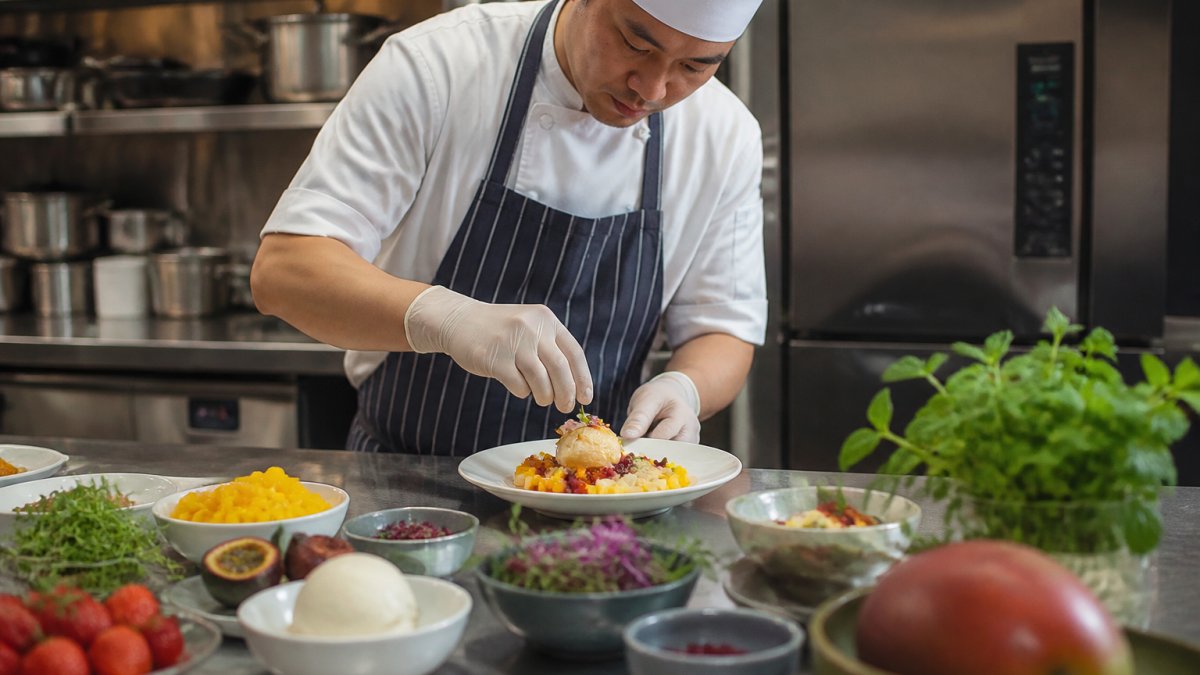
Your brief should cover:
- The season and the ingredients in play
- The price point you need to hit
- The prep time your kitchen can absorb
Test each dish three ways: in the kitchen for taste and consistency, on the pass for speed, and with a small group of regulars for feedback.
Recipe testing also means writing the recipe down properly. The Food Standards Agency allergen guidance sets out what you must record and communicate about the 14 major allergens.
Step 4: Price Your Seasonal Menu for Profit
Price each dish from its true ingredient cost, not from what feels fair. Seasonal pricing works best when you build it on real numbers.
Use this formula:
Menu price = portion cost ÷ target food cost percentage
If a dessert costs £1.20 to make and you want food cost at 30%, the price is £4.00.
Aim to keep overall food cost between 28% and 35% for most menus. Review prices every season, because ingredient costs move.
Step 5: Coordinate Suppliers, Stock and Kitchen Logistics
Coordinate suppliers before you print anything. A menu is a promise, and you need stock to keep it. The operators who handle seasonal change well treat sourcing as a risk exercise, not just a purchase order.
Build a supplier forecast and a backup list
Give your main suppliers your forecast four to six weeks ahead. Confirm quantities, delivery days, minimum orders and the cut-off date for changes. Then do the part most kitchens skip: name a second supplier for every high-risk line.
High-risk lines are the ingredients where a single supplier, a single region, or a single short harvest window could leave you short. Soft fruit, fresh herbs, specialist dairy and premium proteins usually qualify. For each one, record:
- The primary supplier and their lead time
- A named backup supplier and their lead time
- The substitution rule if neither can deliver
A substitution rule is a pre-agreed swap that keeps the dish on the menu without disappointing guests. If British asparagus is unavailable, the rule might be "swap to tenderstem and keep the same price and garnish." If a specific berry is short, the rule might be "switch to the closest frozen equivalent and adjust the dessert description." Write these rules down before the season starts, when you are calm, not on a Friday night when the delivery fails.
Plan for weather and harvest disruption
Seasonal menus are exposed to weather in a way fixed menus are not. A wet summer can wipe out a soft fruit crop; a late frost can delay a spring vegetable by weeks. You cannot control the weather, but you can control how the menu responds to it.
Three practical controls help:
- Flexible menu language. Describe dishes by style and key ingredient rather than naming a single variety. "Seasonal berry sorbet" survives a crop failure better than "Strawberry sorbet" if you can swap the fruit.
- Frozen and preserved fallbacks. For desserts and sauces, a high-quality frozen or preserved version of the same ingredient is often indistinguishable and always available. This is where a reliable frozen supplier earns their place.
- A short "off-menu" list. Keep two or three backup dishes costed, tested and ready to slot in if a core ingredient disappears. They do not need to be printed; they just need to be possible.
Sort stock and kitchen logistics
Once sourcing is secure, align the kitchen:
- Clear out old stock before the new lines arrive, and record what you write off so it feeds into next season's planning
- Update stock levels and par sheets to match the new menu's usage rates
- Brief the kitchen on new prep, holding and plating standards
At Yee Kwan Ice Cream, we supply restaurant groups, cafés and retailers with handcrafted Asian-inspired ice creams and sorbets, including Matcha Green Tea, Chocolate Miso and Toasted Coconut, made in our SALSA-accredited, nut-free facility. That nut-free setup matters if you serve customers with allergies, and our SALSA food safety certification standard backs it up. A frozen dessert range also gives you a weather-proof line: it does not depend on a harvest window, so it holds its place on the menu all season.
Step 6: Train Staff and Communicate the Change
Train your team before launch day, not on it. Staff who cannot describe a dish cannot sell it, and staff who cannot answer an allergen question correctly create a safety risk.
Run a structured pre-launch briefing
Hold a short tasting and briefing session for front-of-house and kitchen. Cover four things for every new or changed dish:
- What is in it, including garnishes, sauces and oils
- What changed from the previous version
- Which of the 14 major allergens it contains, and which it does not
Give everyone a one-page sheet with the key facts. Keep it to the dishes that changed, so it is short enough to actually be read.
Update allergen, dietary and recipe records
A recipe change is a compliance event, not just a kitchen tweak. When you swap an ingredient, you can introduce an allergen that was not there before, or remove one a guest was relying on.
The Food Standards Agency allergen guidance sets out what you must record and communicate about the 14 major allergens. In practice, that means a clear process each season:
- Update the written recipe specification for every changed dish
- Re-check the allergen matrix and dietary labels (vegan, vegetarian, gluten-free) against the new specification
- Update any printed or digital allergen information before the dish goes live
If a dish is no longer suitable for a dietary label it previously carried, remove the label. A guest who orders a "vegan" dessert and is served dairy is a serious failure, not a service hiccup.
Publish consistently across every channel
Update every place your menu appears, and keep the wording identical:
- Printed menus
- Digital menus and your website
- Online ordering platforms
If a dish is off the online menu but still on the printed one, you will get complaints. Put one person in charge of menu accuracy, with a named deputy. When everyone owns it, no one updates the online listing, and that is where mistakes cost you.
Measure results after launch
Set a review date four weeks after launch and check the same numbers you used to plan the season:
- Sales mix for each new dish against its forecast
- Actual food cost against the target percentage
- Waste and write-offs on seasonal ingredients
Use that review to decide what returns next season, what gets reworked, and what gets retired. A seasonal menu is a cycle, not a one-off project. The operators who improve each year are the ones who close the loop and feed the results back into Step 1.
Your Seasonal Menu Change Checklist and Update Frequency
Use this checklist each time you change the menu, and set your update frequency by season.
Seasonal menu change checklist:
- Pull last season's sales mix and food cost data
- Sort dishes into stars, workhorses, puzzles and dogs
- Decide what stays and what goes
On update frequency, most restaurants change their full menu four times a year, once per season. Smaller changes, like a special or a swapped dessert, can run monthly or as ingredients shift.
If you want a distinctive dessert that fits a seasonal rotation, our Tasting Flight Box at £36.00 lets you try 12 flavours before you commit, and our Bundle 2 at £58.00 gives you 8 x 475ml tubs of your choice for a full seasonal run.


Frequently Asked Questions
Can you give me an example of a seasonal menu?
A spring seasonal menu might feature lighter, fresher options such as a rhubarb and ginger sorbet, a strawberry and basil salad, or a matcha and elderflower dessert. In autumn, you could switch to warm-spiced dishes like a chocolate miso brownie or a toasted coconut and pumpkin ice cream. The key is to build the menu around what is at its best right now, then rotate it out when the ingredient quality drops. A tasting flight of smaller portions is a low-risk way to test new flavours before committing to full menu placement.
How often should a restaurant menu be updated?
Most restaurants benefit from a full seasonal menu change four times a year, aligned with spring, summer, autumn and winter. Between those major updates, you can refresh individual dishes or add limited-time offers every four to six weeks to keep regulars engaged. The right restaurant menu update frequency depends on your ingredient sourcing, your kitchen's capacity to test new dishes, and how quickly your customers tire of the current selection. Track sales mix data to decide whether a shorter or longer cycle suits your operation.
How do you price seasonal menu items?
Start by calculating the true cost per portion, including ingredients, wastage and any extra prep time. Then apply your target gross profit margin, which for many restaurants sits between 65% and 75% on desserts. Seasonal ingredients can fluctuate in price, so build in a small buffer or plan a substitute ingredient before you finalise the price. Review seasonal menu pricing each time you change the menu, and compare your prices against similar venues in your area. If a dish uses a premium ingredient, say so in the menu description so customers understand the value.
How do you tell customers about seasonal menu changes?
Use every channel you have: printed menus, digital menus, your website, social media and online ordering platforms. Train front-of-house staff to describe the new dishes confidently, including key ingredients and allergens. A short note on the menu explaining why the change happened, such as peak season for a particular ingredient, helps customers feel part of the story. If you use a seasonal menu change checklist, add a step for updating every channel at the same time so no customer sees an out-of-date menu.
Changing your menu with the seasons is one of the hardest jobs in a kitchen to get right. It needs data, a calendar, tested dishes and a team that knows the new line-up. Yee Kwan Ice Cream makes that easier with award-winning, Asian-inspired ice creams and sorbets, handcrafted in a SALSA-accredited, nut-free facility with a selection of gluten-free flavours. Get started with Yee Kwan Ice Cream and build a seasonal dessert menu your customers will come back for.