
Nut-Free Ice Cream for Cafés: Premium Options & Allergen Safety
by Editorial Team
Table of Contents
- Why Nut-Free Ice Cream Matters for Cafés
- Premium Nut-Free Ice Cream Options for Your Menu
- Building an Ice Cream Supplier Allergen Checklist
- Understanding Allergen Information for Ice Cream
- Managing Ice Cream Cross-Contamination in Your Café
- Designing Your Nut Allergy Café Menu
- Quick Comparison: Nut-Free Ice Cream Selection
- Pricing and Profitability for Café Operators
- Frequently Asked Questions
Last Updated: October 19, 2026
Why Nut-Free Ice Cream Matters for Cafés
Nut allergies affect millions across the UK and are among the most serious to manage. For café operators, nut-free ice cream cafes aren't a nice addition, they're a safety imperative that opens your doors to customers forced to skip dessert elsewhere.
A single cross-contamination incident can cause severe reactions, damage your reputation, and expose you to liability. Venues that take allergen management seriously see higher loyalty and word-of-mouth, particularly from parents and gift-givers.
There's also a commercial angle: customers with nut allergies are often affluent and health-conscious, willing to pay premium prices for desserts they can trust.
Premium Nut-Free Ice Cream Options for Your Menu
Selecting the right supplier is the foundation of your allergen strategy: your choice affects flavour, texture, and your ability to guarantee safety. The best combine rigorous allergen controls with distinctive flavours that justify premium pricing.
Yee Kwan Ice Cream is purpose-built for nut-free ice cream cafes across the UK, delivering on safety and taste.
The signature flavours offer something most high-street competitors cannot match. Matcha Green Tea combines premium matcha with fragrant coconut cream; Chocolate Miso pairs rich dark chocolate with sweet miso paste for a salted caramel-like taste; Toasted Coconut delivers pure silky coconut.

Asian-Inspired Flavours That Drive Customer Engagement
Asian-inspired flavours have become a key differentiator for premium cafés, signalling sophistication and culinary confidence. Customers seeking something beyond the ordinary actively seek out venues with matcha, miso, and coconut-forward options.
Matcha Green Tea taps into the wellness trend with earthy, vegetal notes that appeal to matcha latte drinkers. Chocolate Miso is a conversation starter, pairing rich cocoa with umami-forward miso. Toasted Coconut offers an approachable entry point for hesitant customers.
The business case is straightforward: distinctive flavours command premium pricing and generate social media buzz, invaluable organic marketing for independents competing against national chains.
Vegan & Dairy-Free Alternatives
Vegan and dairy-free ice cream has moved from niche to mainstream expectation, and modern vegan ice cream, when formulated properly, rivals dairy versions in texture and taste.
Yee Kwan's vegan range uses coconut cream as its base, delivering creamy texture without dairy or eggs.
For café operators, vegan options solve multiple problems at once: dairy-free for lactose-intolerant customers, allergen-friendly for nut allergy sufferers when sourced from dedicated facilities, and aligned with ethical values that appeal to younger demographics.
Individual Portions for Quick Service
Café operations demand speed without sacrificing quality. Frolyk Vegan Vanilla and Frolyk Vegan Salted Caramel come in ready-to-serve 100ml portions at £3.50 each, enabling rapid service during peak hours whilst maintaining portion control and food safety.
Individual portions eliminate scooping and reduce cross-contamination risk during service. Customers receive sealed, labelled products they can verify for allergen information themselves, transparency that builds trust and reduces liability exposure.
Building an Ice Cream Supplier Allergen Checklist
Choosing a supplier requires rigorous vetting beyond price and flavour: your supplier must demonstrate genuine commitment to allergen management through verifiable systems and certifications.
When evaluating potential suppliers, ask these critical questions:
Facility Accreditation: Does the supplier operate a dedicated nut-free facility with third-party verification? SALSA accreditation provides independent assurance that allergen protocols are audited and enforced. Generic "nut-free claims" without facility certification are insufficient.
Ingredient Transparency: Request complete ingredient lists for every flavour, including "may contain" traces, plus detailed sourcing information for each ingredient.
Cross-Contamination Controls: How are nut-free products physically separated from other lines?
Documentation and Traceability: Can the supplier provide batch-specific allergen documentation and trace every ingredient to source?
Third-Party Testing: Does the supplier conduct independent allergen testing on finished batches to verify nut absence?
Insurance and Liability: What product liability insurance does the supplier carry, and will they indemnify your café against allergen-related incidents?
| Evaluation Criteria | What to Look For | Why It Matters |
|---|---|---|
| Facility Accreditation | SALSA or equivalent third-party certification | Proves independent audit of allergen controls |
| Ingredient Documentation | Complete sourcing information for every component | Allows you to identify potential hidden allergens |
| Cross-Contamination Protocol | Dedicated equipment, separate storage, scheduled production | Prevents trace nut exposure during manufacturing |
| Batch Traceability | Ability to identify product source and ingredients by batch number | Critical for investigating incidents and protecting customers |
| Product Testing | Independent allergen testing of finished goods | Verifies nut absence in final product |
| Insurance & Liability | Product liability coverage and indemnification | Protects your café from financial and legal exposure |
Understanding Allergen Information for Ice Cream
Allergen labelling for ice cream is governed by the Food Standards Agency (FSA) and the Food Information Regulations 2014.
The FSA requires all 14 major allergens to be clearly identified if present. For ice cream, the most common are milk, eggs, tree nuts, peanuts, soya, and sesame.
When sourcing nut-free ice cream, request allergen documentation that clearly states whether the product is produced in a nut-free facility or simply doesn't contain nuts as an ingredient. According to FSA guidance on allergen labelling, venues must ensure customers can identify allergens before purchase.
Display allergen information prominently on menus or point-of-sale systems; many cafés use colour-coded icons. Staff must also answer questions confidently and direct people to written documentation when needed.
Managing Ice Cream Cross-Contamination in Your Café
Cross-contamination during service is where many cafés fail allergen management. You can source perfectly safe ice cream from a dedicated facility, then undo all that work through careless handling in your own operation.
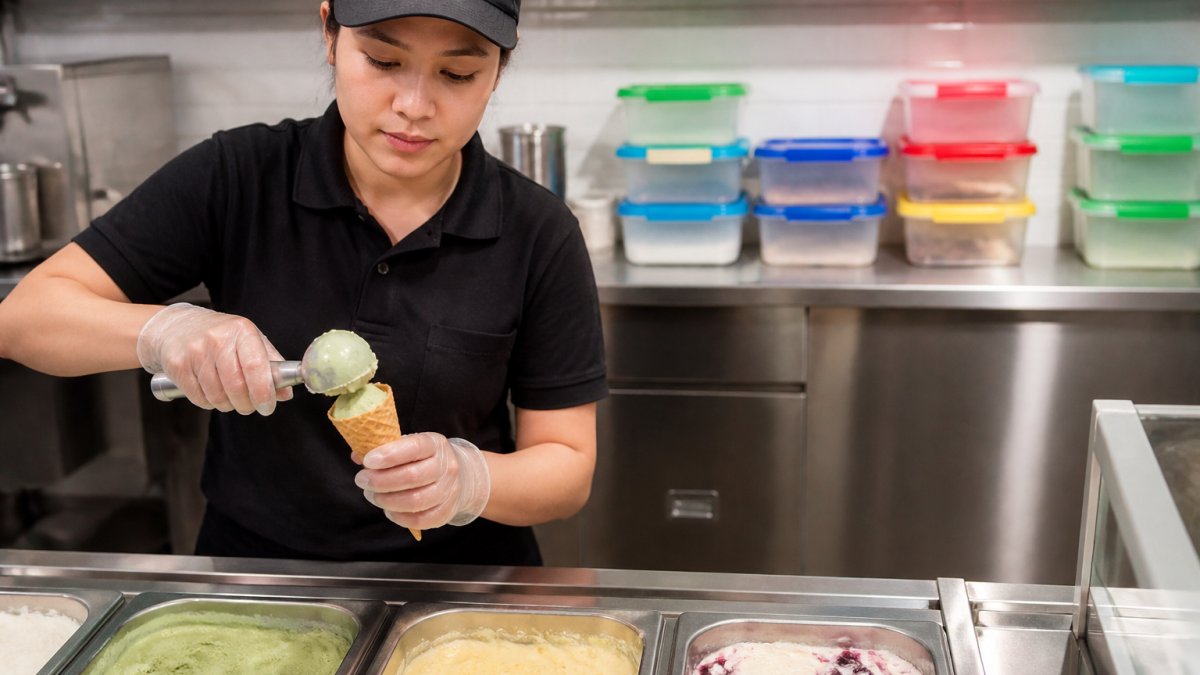
Segregation and Storage Best Practices
Physical separation is your first line of defence. Store nut-free ice cream in a dedicated, clearly labelled freezer section and use separate scoops, tongs, and serving utensils.
Colour coding is an effective visual system: assign a specific colour to nut-free utensils and storage areas so staff can instantly identify them.
When receiving deliveries, inspect packaging for damage and verify products are properly sealed.
Frolyk Vegan Vanilla Ice Cream 100ml →
Temperature control matters too. Maintain freezer temperatures at -18°C or below. Fluctuating temperatures can compromise product integrity and create condensation that attracts cross-contamination. Check temperatures regularly and keep logs to demonstrate compliance.
Staff Training and Service Protocols
Your team is the final barrier between a safe product and a customer reaction. Every staff member who handles ice cream must understand allergen risks and follow strict protocols.
Training should cover: what nut allergies are and why they're serious; which products are nut-free; how to identify and use dedicated utensils; how to answer customer allergen questions; and what to do if cross-contamination occurs. New staff should complete allergen training before their first food-handling shift.
Create a written service protocol, e.g.
Implement a verification step: before serving, confirm with the customer that they're ordering a nut-free product and understand the allergen information. This double-check catches mistakes and builds confidence.
Designing Your Nut Allergy Café Menu
Your menu design communicates your allergen commitment. Clear, accessible allergen information builds trust and reduces anxiety for customers with nut allergies.
Start by clearly marking all nut-free ice cream options on your menu.
Go beyond ice cream.
Include allergen information on menus or via QR codes linking to detailed documentation.
Train your team to proactively offer nut-free options whenever customers ask about desserts, for allergy sufferers, this signals you've anticipated their needs.
Consider seasonal variations featuring different Yee Kwan flavours, Matcha Green Tea in spring, Chocolate Miso in autumn, to create excitement and give customers reasons to return.

Quick Comparison: Nut-Free Ice Cream Selection
When building your nut-free ice cream programme, you're choosing between bulk tubs for flexibility and individual portions for convenience and safety, depending on your volume, storage space, and service model.
Yee Kwan's bulk options, Vegan Vanilla, Vegan Salted Caramel, Vegan Matcha Green Tea, Vegan Mango, Vegan Toasted Coconut, and Vegan Chocolate Miso, start at £31.00 per tub.

Individual portions (100ml) eliminate scooping, reduce cross-contamination risk, and simplify allergen communication.
| Format | Unit Price | Cost Per Serving | Best For | Allergen Advantage |
|---|---|---|---|---|
| Bulk Tub (1L) | £31.00 | ~£1.50-£2.00 | High-volume cafés | Requires dedicated storage & utensils |
| Individual Portion (100ml) | £3.50 | £3.50 | Quick service, limited space | Sealed, labelled, zero scooping risk |
Most successful cafés stock both formats. Bulk tubs cover regular menu service, while individual portions handle rush periods and customers seeking grab-and-go options.
Pricing and Profitability for Café Operators
Premium nut-free ice cream commands higher margins than standard offerings, but only if you price strategically.
Start with your cost basis. Individual portions cost £3.50 per serving.
Price your nut-free ice cream 20-30% above standard vanilla. According to British Institute of Food Science guidance on premium food positioning, specialty ice creams with clear quality or safety differentiation support 25-35% price premiums.
Build profitability into your menu structure.
Calculate your break-even point. Even accounting for waste and seasonal variations, nut-free ice cream is highly profitable.
Track sales by flavour. Use sales data to inform your next order.
Don't forget the operational cost of allergen management: dedicated storage, additional staff training, and documentation systems are real expenses.
Offering nut-free ice cream for cafés is a straightforward commercial and safety decision.
The initial investment in supplier vetting, staff training, and operational protocols pays dividends through higher customer satisfaction, repeat business, and positive word-of-mouth.
Yee Kwan Ice Cream's SALSA-accredited facility, award-winning flavours, and 15+ years of industry experience make it the natural choice for UK cafés serious about nut-free ice cream. With premium Asian-inspired flavours, transparent allergen documentation, and reliable supply, Yee Kwan helps you create memorable dessert experiences whilst protecting your customers and your business. FSA allergen labelling requirements for food businesses provide the regulatory framework; Yee Kwan provides the product excellence to exceed it.
Frequently Asked Questions
What should cafés check when buying nut-free ice cream?
When selecting nut-free ice cream for your café, verify that the supplier operates a dedicated nut-free facility and holds appropriate food safety certifications. Request detailed allergen information, including whether the product may contain traces of nuts or other allergens. Confirm the supplier can provide consistent supply year-round and ask about their cross-contamination prevention measures. Check that nutritional and ingredient documentation is available for customer queries, and ensure the flavours align with your menu positioning, whether adventurous options like matcha or miso, or classic choices like vanilla and chocolate.
How can cafés verify that ice cream is suitable for customers with nut allergies?
Request a full allergen information sheet from your ice cream supplier detailing all ingredients and potential cross-contamination risks. Look for certification from recognised food safety bodies such as SALSA. Ask whether the facility processes nuts separately or operates entirely nut-free. Many suppliers, including award-winning producers, now provide clear allergen labelling and can confirm whether products are safe for severe nut allergy sufferers. Always communicate these details to staff so they can confidently answer customer questions about allergen safety.
What does 'nut-free' actually mean for ice cream labelling?
A product labelled 'nut-free' means it contains no peanuts or tree nuts as direct ingredients. However, it may still carry a warning about traces of nuts if produced in a facility that also handles nuts. For customers with severe allergies, the distinction is critical: 'nut-free' is not the same as 'allergen-free.' Always check the fine print for statements like 'may contain traces of nuts' and ask your supplier about their facility practices. Some producers operate entirely nut-free facilities, which offers greater assurance for allergen-sensitive customers.
How can cafés reduce cross-contamination risks when serving ice cream?
Implement strict segregation protocols: store nut-free ice cream in a separate freezer or clearly marked section away from nut-containing products. Use dedicated scoops for each flavour and wash utensils thoroughly between servings. Train staff to change gloves and clean the serving area when switching between nut-free and other products. Never allow the same scoop to touch multiple flavours. Display clear allergen signage at the counter and maintain written records of which products are nut-free. Regular staff training ensures everyone understands the importance of these procedures for customer safety.
What pricing should cafés expect for premium nut-free ice cream?
Premium nut-free ice cream typically costs more than mass-market alternatives due to higher-quality ingredients, rigorous safety protocols, and smaller production runs. Individual portions start from £3.50, while bulk tubs suitable for café service are priced at £31, with Vegan Toasted Coconut at £45. Award-winning producers justify the premium through distinctive flavours, consistent quality, and the reduced liability risk of serving certified allergen-safe products. Calculate your margin based on scoop size and portion price to ensure profitability while maintaining the quality positioning that justifies the higher cost to customers.